
Manus in the Second World War: An Australian Perspective
Manus Island is a tiny dot in the Pacific, barely visible on most maps of Papua New Guinea. Yet during the Second World War, this quiet corner of the Admiralty Islands became one of the most important Allied bases in the entire Pacific theatre. Many Australians have never heard of it, even though their countrymen fought and died there, and even though the harbour that anchored the Allied counter-offensive against Japan still holds some of the most remarkable wartime relics on earth. We think that’s a story worth telling, especially for Australian travellers who might one day find themselves standing on its shores.
Why Manus Mattered in the Pacific War
Location is everything in war, and Manus had one of the best locations in the South West Pacific. Sitting just north of the equator and roughly 800 kilometres from the PNG mainland, the island gave the Allies a forward position from which to strike Japanese strongholds across New Guinea, the Philippines and beyond. More importantly, it offered something the Allies desperately needed: a huge, deep, sheltered harbour.
The Admiralty Islands and Their Strategic Value
The Admiralty Islands group, of which Manus is by far the largest, sits at a crossroads of Pacific sea lanes. Japanese planners recognised this early, and so did the Allies. Control of the Admiralties meant control of the approaches to New Guinea’s north coast, the Bismarck Sea and the shipping routes that fed Japan’s southern empire. For the United States and Australia, seizing Manus was not simply a matter of denying the Japanese a base. It was about building one of their own, close enough to the front line to support the next wave of operations.
Seeadler Harbour: The Allies’ Secret Weapon
Seeadler Harbour, on the north-east coast of Manus, is a natural anchorage so large and so deep that it could shelter an entire fleet. The Allies took full advantage. After its capture in 1944, Seeadler Harbour became the largest Allied naval base in the Pacific after Pearl Harbor. At its peak, the harbour hosted hundreds of ships at once, along with floating dry docks, repair yards, fuel depots and barracks built by the US Navy’s Seabees. The Australian 1st Cavalry Division, meanwhile, fought through the Admiralty Islands campaign in 1944, clearing Japanese resistance and securing the ground that made the base possible. For a brief but decisive period, this remote PNG harbour was one of the busiest military ports on the planet.
The Japanese Occupation and the Australian Response
The war reached Manus in 1942, and it arrived suddenly. Japanese forces landed on the island in April that year, part of a broader push through the Bismarck Archipelago and northern New Guinea. For the small Australian garrison and the local population, the occupation brought hardship, fear and, in one case, one of the worst maritime disasters in Australian history.
Japanese Landings and Early Resistance
When Japanese troops came ashore at Lorengau and other points on Manus, they quickly overwhelmed the modest Australian presence. The 1st Independent Company, an Australian commando-style unit, had been operating in the region, and some of its men evaded capture and continued to harass the occupiers. Others were not so fortunate. In June 1942, the Japanese transport ship Montevideo Maru left Rabaul carrying prisoners of war and civilian internees. It was torpedoed off the coast of Luzon by the American submarine USS Sturgeon. The Montevideo Maru tragedy killed over 1,000 Australian prisoners of war, making it the deadliest single maritime event in Australia’s history. Among those lost were men captured in the Admiralties and New Guinea, a loss that still resonates in Australia today.
Coastwatchers: Australia’s Eyes and Ears
With regular forces pushed out, Australia relied on its coastwatchers, brave men who stayed behind in Japanese-held territory to report on ship movements, troop buildups and weather. On Manus and across the Admiralties, coastwatchers, often supported by local villagers who risked their lives to help them, sent radio intelligence back to Allied headquarters. That information helped shape the Allied plan to retake the islands in 1944, and it saved countless lives by revealing where Japanese defences were strongest.
Key Battles and Operations on Manus
The recapture of Manus and the wider Admiralty Islands was code-named Operation Brewer. It was a bold, fast-moving campaign that caught the Japanese off guard and gave the Allies a base that would serve them for the rest of the war.
Operation Brewer: The Invasion of Los Negros
On 29 February 1944, American forces from the US 1st Cavalry Division landed on Los Negros, a small island separated from Manus by a narrow strait and home to the vital Momote Airfield. The initial landing was chaotic. The Japanese defenders fought hard, and the Americans were stretched thin for several days. But reinforcements arrived, air support came in, and the beachhead held. The capture of Los Negros gave the Allies an airfield almost immediately, and it opened the door to the main island of Manus.
The Capture of Lorengau and Momote Airfield
With Los Negros secured, the Allies turned their attention to Lorengau, the administrative centre of Manus and the site of a major Japanese garrison. The fighting around Lorengau and the nearby Lorengau airfield was some of the toughest of the campaign, with Japanese troops dug into the hills and jungle. The US 1st Cavalry Division, later joined by Australian forces including the 1st Cavalry Division’s supporting units, pushed through. By the end of March 1944, organised Japanese resistance on Manus had collapsed. Momote Airfield on Los Negros was quickly repaired and expanded, becoming a key base for Allied aircraft supporting operations further north.
Legacy of War: What Remains Today
Eighty years on, Manus still carries the scars and souvenirs of its wartime past. For Australian visitors with an interest in history, the island offers something rare: a chance to see the Second World War not in a museum, but in the water and on the land where it actually happened.
Diving into History: WWII Wrecks and Reefs
Seeadler Harbour is a graveyard for wartime ships and aircraft, and divers consider it one of the Pacific’s great wreck-diving destinations. Sunken landing craft, barges, aircraft and larger vessels lie in relatively shallow, warm water, often covered in coral and teeming with fish. Local dive operators based in Lorengau run trips to many of these sites, and visibility is generally excellent. It’s worth clarifying one common mix-up: the famous SS President Coolidge, one of the world’s best wreck dives, is in Vanuatu, not Manus. Manus has its own wrecks, less famous but no less atmospheric, and diving them is a genuinely moving experience.
Memorials and Remembrance in Lorengau
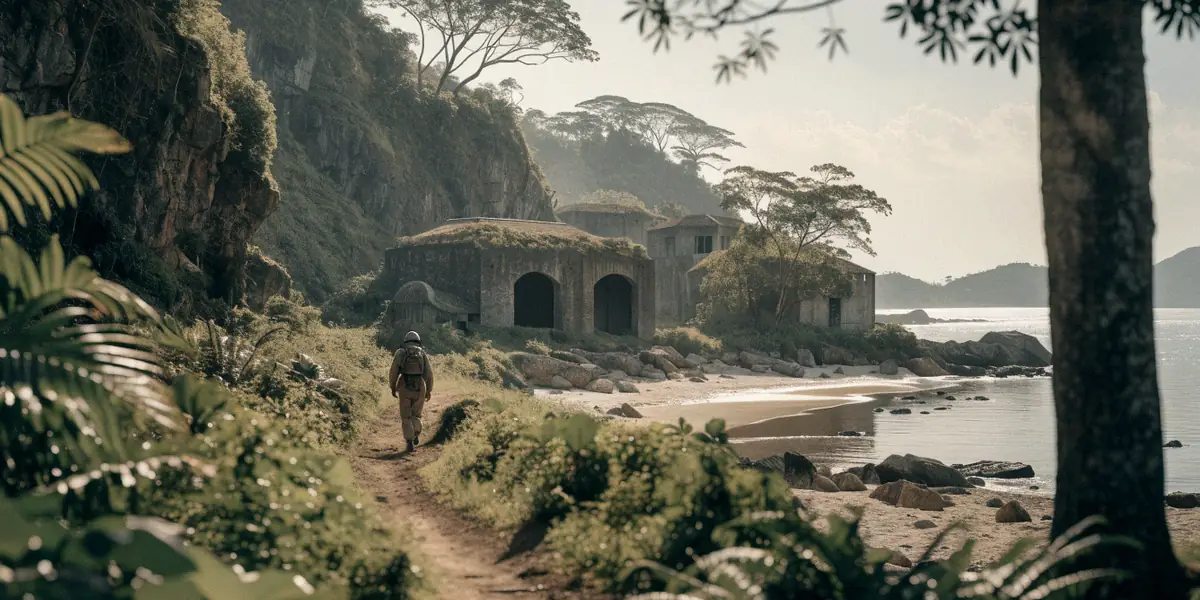
On land, remnants of the war are scattered across Manus. You’ll find old bunkers, gun emplacements, airstrip ruins and memorials, particularly around Lorengau and Los Negros. Some are maintained, others are quietly being reclaimed by the jungle. For Australians, these sites are a reminder that the war in the Pacific was fought close to home, and that Papua New Guinean communities bore enormous hardship alongside Australian and American troops.
Visiting Manus for WWII History: Practical Tips
Manus is not a mainstream tourist destination, and that’s part of its appeal. Getting there takes a bit of planning, but for history-minded Australians, the effort is well worth it.
Getting There: Flights and Logistics from Australia
The usual route is to fly from Australia to Port Moresby, then connect to Manus. Air Niugini operates flights from Port Moresby to Manus, with connections from Australia through Brisbane, Cairns and Sydney. Australians typically need a visa to enter PNG, and it’s worth arranging this well in advance. Travel insurance that covers remote areas and diving is strongly recommended.
Where to Stay and How to Tour
Accommodation on Manus is limited but comfortable. The Lorengau Hotel is the best-known option and a convenient base for exploring the island and arranging dive trips. Local operators can organise guided tours of WWII sites, boat trips into Seeadler Harbour and diving excursions. A few practical tips:
- Book flights and accommodation well ahead, as capacity is limited.
- Bring cash, as card facilities are scarce outside Lorengau.
- Respect local customs and ask before entering villages or photographing people.
- Travel with a local guide where possible, both for safety and for the stories they can share.
- Check the latest travel advice from the Australian government before you go.
FAQ
Was Manus Island important in World War II?
Yes. Manus was a major Allied base in the Pacific. Its Seeadler Harbour became the largest Allied naval base in the Pacific after Pearl Harbor, supporting operations across New Guinea and the Philippines.
Can Australians visit Manus Island today?
Yes, Australians can visit Manus, usually by flying to Port Moresby and then connecting to Manus with Air Niugini. A PNG visa is generally required, and travel to remote areas should be planned carefully.
Are there WWII wrecks to dive in Manus?
There are. Seeadler Harbour contains numerous sunken ships, landing craft and aircraft from the war, and local dive operators in Lorengau run trips to these sites. Note that the famous SS President Coolidge is in Vanuatu, not Manus.
What happened to the Montevideo Maru?
The Montevideo Maru was a Japanese transport ship carrying Australian prisoners of war and civilians. It was torpedoed in 1942, killing over 1,000 Australian POWs, making it the worst maritime disaster in Australian history.
Where should I stay when visiting Manus?
The Lorengau Hotel is the main option for visitors and a good base for arranging tours and dive trips. Accommodation is limited, so book early.
Understanding Manus’s Second World War history changes the way you see the island. It turns a remote Pacific outpost into a place of memory, where Australian and Papua New Guinean stories are woven together in the jungle, the harbour and the wrecks below. For Australian travellers, visiting Manus is not just a trip. It’s a chance to honour a shared legacy that deserves to be remembered.