Tok Pisin Phrases for Travellers: Speak Like a Local on Manus Island
You step off the Air Niugini flight from Port Moresby onto the tarmac at Momote Airport, the humid air hits you, and suddenly every conversation around you is happening in a language you don’t recognise. A taxi driver calls out, a market vendor smiles and says something you can’t quite catch, and you realise that a handful of Tok Pisin words would completely change how this trip unfolds. That’s exactly what we want to help you with. Manus Island rewards travellers who make an effort, and the effort required is smaller than you’d think.
Why Tok Pisin Matters on Manus Island
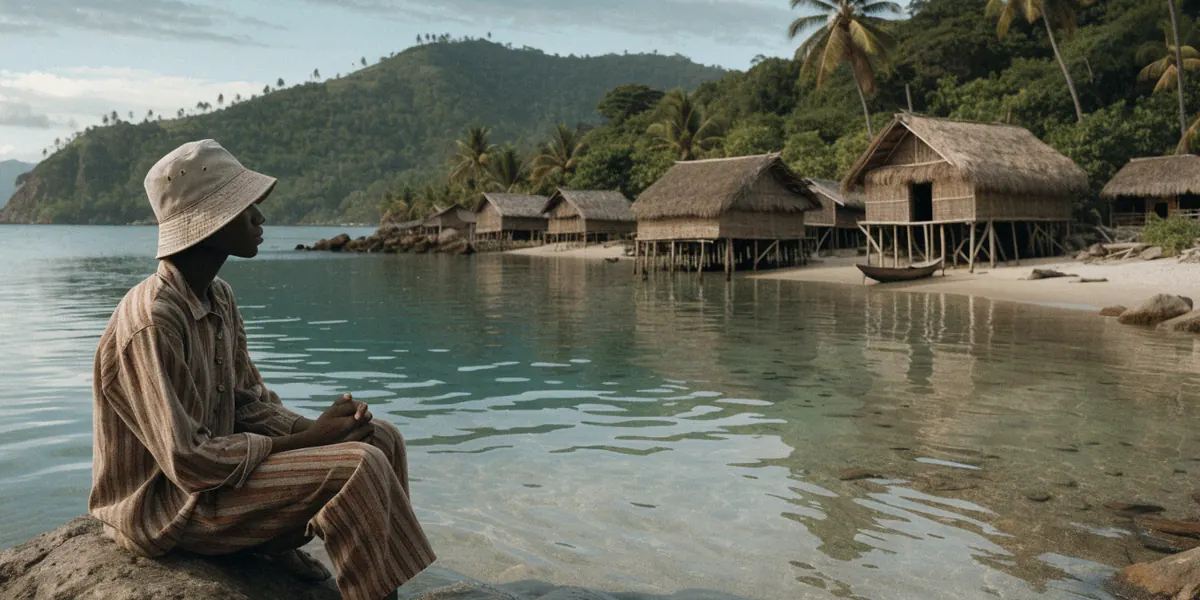
Tok Pisin is one of the official languages of Papua New Guinea and is widely spoken in Manus, functioning as the everyday lingua franca across the province. While English is also official and many people in Lorengau speak it reasonably well, Tok Pisin is the language you’ll hear in markets, on boats, in villages, and between locals going about their day. Making the effort to use it signals respect, and in a place where relationships matter, that respect opens doors.
English vs. Tok Pisin: What to Expect
In Lorengau, the capital of Manus Province and the main entry point for Australian travellers, you’ll find that hotel staff, dive operators, and government offices generally speak English. Outside of town, English becomes patchier. Village elders may speak it well, younger children often don’t, and the further you get from the provincial capital, the more Tok Pisin becomes essential. Manus Province also has its own dialect influences, so you may hear variations on standard Tok Pisin, but the basics we cover here will serve you well everywhere.
The Role of Tok Pisin in Daily Life
Think of Tok Pisin as the social glue of PNG. It’s used in church services, at the market, on PMV routes, and in casual conversation between people from different language groups. Papua New Guinea has over 800 languages, and Tok Pisin is what bridges them. On Manus, that means a few phrases go a long way toward building trust, whether you’re buying fresh fish in Lorengau or arranging a boat to a remote reef.
Essential Greetings and Polite Expressions
Greetings are the foundation of any interaction in Manus culture. A smile paired with a greeting is expected, and skipping it can come across as rude. Start with these basics and you’ll be fine.
Saying Hello and Goodbye
- Halo — Hello
- Gutpela moning — Good morning
- Gutpela apinun — Good afternoon
- Gutpela nait — Good evening / good night
- Yu stap gut? — How are you? (literally “are you well?”)
- Mi stap gut — I’m well
- Gutbai — Goodbye
- Lukim yu — See you
Showing Gratitude and Respect
Two words you’ll use constantly are Tenkyu (thank you) and Plis (please). Add Sori (sorry) for apologies, and Ekskyus mi (excuse me) when you need to get past someone or interrupt politely. If someone helps you, Tenkyu tru means “thank you very much” and lands warmly. Respectful address matters too: Papa for an older man, Mama for an older woman, and Brata or Sista for peers.
Getting Around: Directions and Transport Phrases
Manus is a place where getting around often means boats, not cars. Whether you’re chasing a PMV in Lorengau or hiring a dinghy to reach a dive site in the Admiralty Islands, a few transport phrases will save you time and money.
Asking for Directions
- Wanem rot? — Which way?
- Wanem rot long go long Lorengau? — Which way to Lorengau?
- Em i longwe? — Is it far?
- Em i klostu? — Is it close?
- Mi no save — I don’t know
- Yu ken soim mi long map? — Can you show me on the map?
Negotiating Transport and Fares
PMV (Public Motor Vehicle) is the common term for local transport in Papua New Guinea, and in Lorengau you’ll find PMVs and taxis doing the rounds. To ask about fares, use Hamas long go long… (How much to go to…?). For boats, which are essential for exploring the Admiralty Islands, try Hamas long wanpela bot? (How much for a boat?). If you want to hire a boat for the day, say Mi laik haisim wanpela bot long wanpela de (I want to hire a boat for one day). Always confirm the price before you set off, and don’t be shy about negotiating politely.
Diving and Accommodation: Specialised Vocabulary
The Admiralty Islands, including Manus, are renowned for world-class diving with pristine reefs and WWII wrecks, and many dive operators here speak English fluently. But if you’re diving with local guides, knowing a few Tok Pisin terms makes the experience richer and safer.
Diving and Marine Life Terms
- Wara — Water
- Solwara — Saltwater / sea
- Pis — Fish
- Rip — Reef
- Bot — Boat
- Daiv — Dive
- Tambu — Taboo / protected area (often applied to reef sanctuaries)
- I gutpela long swim? — Is it good for swimming?
Booking Accommodation and Homestays
Manus has a mix of small guesthouses, dive lodges, and village homestays. To book a room, say Mi laik stap long wanpela haus (I want to stay in a house) or more specifically Mi laik bukim wanpela rum (I want to book a room). The key question is Hamas long wanpela nait? (How much per night?). If you want to know whether meals are included, ask Kaikai i stap insait? (Is food included?). Homestays are a fantastic way to experience Manus village life, and hosts appreciate guests who greet them properly and ask permission before taking photos.
Food, Markets, and Socialising
Lorengau market is the beating heart of the province’s food culture. You’ll find fresh seafood, tropical fruit, root vegetables, and local staples like saksak (sago). Knowing how to shop and compliment a meal will make you plenty of friends.
Shopping at the Market
- Mi laik baim… — I want to buy…
- Hamas dispela? — How much is this?
- Em i antap tumas — That’s too expensive
- Yu gat sampela moa? — Do you have any more?
- Mi laik baim tripela — I want to buy three
Complimenting Food and Making Friends
When you taste something you love, say Em i swit! (It’s delicious!). If you’re really enjoying it, Em i swit moa (It’s even more delicious) will get a laugh. To thank someone for a meal, Tenkyu long kaikai (Thank you for the food) is perfect. Sharing a meal is a social event in Manus, so don’t rush. Sit, chat, ask questions about the fish you’re eating or how the saksak was prepared, and you’ll find conversation flows easily.
Emergency and Health Phrases
We hope you never need these, but they’re worth memorising before you arrive. Lorengau has a hospital that handles routine care, but serious cases may require evacuation to Port Moresby or, in extreme situations, to Australia. Travel insurance that covers medical evacuation is essential for any trip to Manus.
Asking for Help
- Helpim mi! — Help me!
- Mi nidim help — I need help
- Kolsem wanem? — What’s wrong? / What happened?
- Yu ken helpim mi? — Can you help me?
Describing Symptoms and Finding Medical Care
If you’re unwell, Mi sik means “I’m sick.” To find the hospital, ask We i stap haus sik? (Where is the hospital?). For more specific issues, Mi gat pen long… (I have pain in…) followed by the body part works well. Mi gat bikpela sik means “I’m very sick” and signals urgency. If you need a doctor, ask for dokta; for a nurse, nes.
FAQ
Do I need to speak Tok Pisin to travel to Manus Island?
No, English is widely understood in Lorengau and at dive lodges, and Australian travellers can manage most trips with English alone. However, learning even a few Tok Pisin phrases shows respect and dramatically improves interactions in villages and markets.
How do I get to Manus Island from Australia?
Australian travellers can fly to Manus via Port Moresby with Air Niugini or PNG Air. From Port Moresby, the flight to Momote Airport near Lorengau takes around two hours. Book connections with buffer time, as PNG domestic schedules can shift.
Is Tok Pisin the same everywhere in Papua New Guinea?
Tok Pisin is fairly consistent across PNG, but regional variations exist. Manus Province has its own dialect influences and local words, so you may hear slight differences from what you’d hear in Port Moresby or the Highlands.
What’s the best way to get around Lorengau and the Admiralty Islands?
In Lorengau, PMVs and taxis are the standard local transport. To reach outer islands and dive sites in the Admiralty Islands, you’ll need to hire a boat, usually arranged through your accommodation or a local dive operator.
Can I use Tok Pisin phrases in a diving context?
Absolutely. Terms like wara (water), pis (fish), and rip (reef) are useful with local guides, even if your dive operator briefs you in English. It’s a small gesture that local dive crews genuinely appreciate.
Learning even a handful of Tok Pisin words transforms a trip to Manus Island from a passive visit into a genuine connection. Every Halo, every Tenkyu, every attempt at Wanem rot? tells the people you meet that you’ve come to engage, not just observe. On an island where community and respect sit at the centre of life, that effort is remembered long after you’ve flown home, and it’s the difference between a good trip and an unforgettable one.